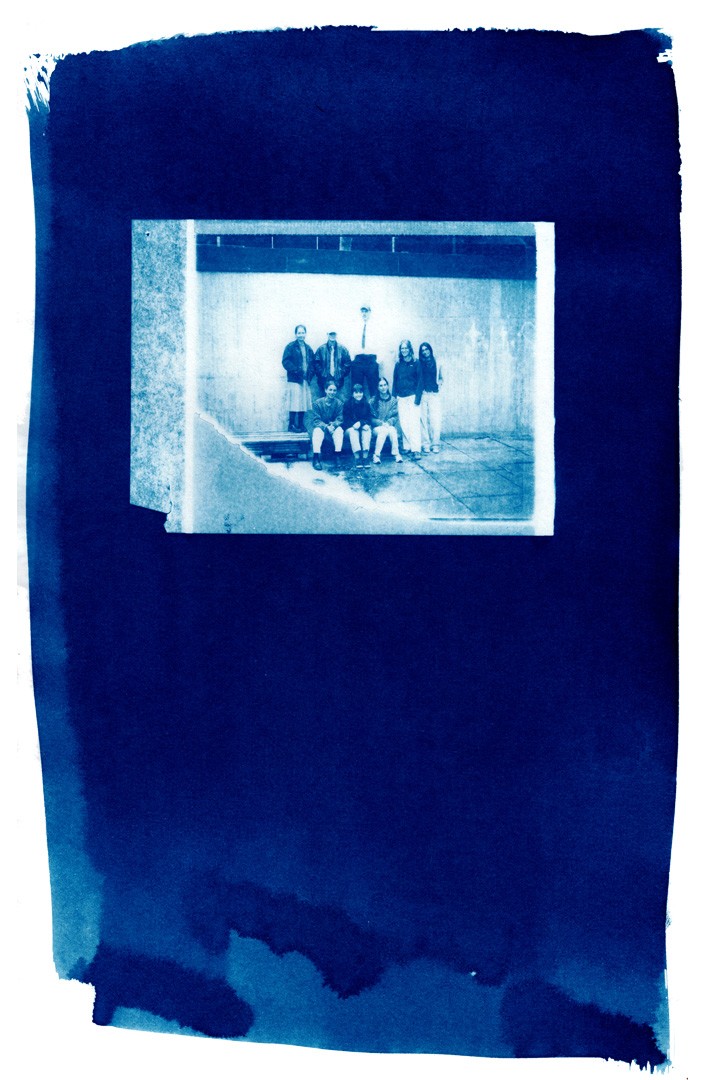
How can colours be extracted from regional plants and used in artistic design? Students from the Kunsthochschule Kassel and the University of Kassel explored this question in the interdisciplinary workshop seminar ‘Blau machen’ during the summer term of 2026. The results of this collaborative project between the Photography and Textile Study Workshops at the Kunsthochschule are on display at the Hessian State Estate Frankenhausen until 1 March 2027.
Under the title ‘Blau machen – Extracting Dyes Yourself and Using Alternative Photographic Processes for Art and Design’, the students explored the creative possibilities of plant-based dyes and cyanotype. Using plants such as woad, hollyhock, mallow, blueberries and red cabbage, the students created dyed textiles and papers, as well as photographic works in the characteristic blue of cyanotype.
The project combines artistic practice with ecological considerations and the sustainable use of materials. In collaboration with the Department of Ecological Agricultural Sciences at the University of Kassel, which had specially established a trial field of woad, the students investigated the potential of regional plants as natural sources of colour. The project was led by Markus Etienne (Photography Study Workshops) and Nadja Porsch (Textile Study Workshops). Expert input was provided by herb specialist Anja Ast and artist Olga Holzschuh, a graduate of the Kunsthochschule Kassel.
The exhibition, running until 1 March 2027, presents the results of the collaborative research and design processes and invites visitors to rediscover natural materials and alternative photographic techniques.
Venue
Hessische Staatsdomäne Frankenhausen
University of Kassel
Frankenhausen 1
34393 Grebenstein
Opening hours
Thursday and Friday: 10 am–6 pm
Saturday: 10 am–2 pm