Research Programme
The RTG’s title “Dimensions of Exhibiting” refers to the multitude of elements and layers involved in exhibition practices: The institutional frameworks within which exhibitions take place, the actors involved, the origins and scale of financial resources, available display strategies and architectural designs, the relationship between intended publics and actual visitors, the handling of objects and the sustainability of their presentation, as well as educational formats and public relations—and last, but not least, the exhibition as a distinct aesthetic form.
In order to systemically approach these key aspects, the RTG’s research programme is structured along three areas of work—termed Display, Politics, and Infrastructure—that each address one constitutive dimension of the phenomenon. While each of the work areas follows its own internal logic and foregrounds particular aspects of exhibiting, they must be understood as closely entangled and mutually constitutive.
Display
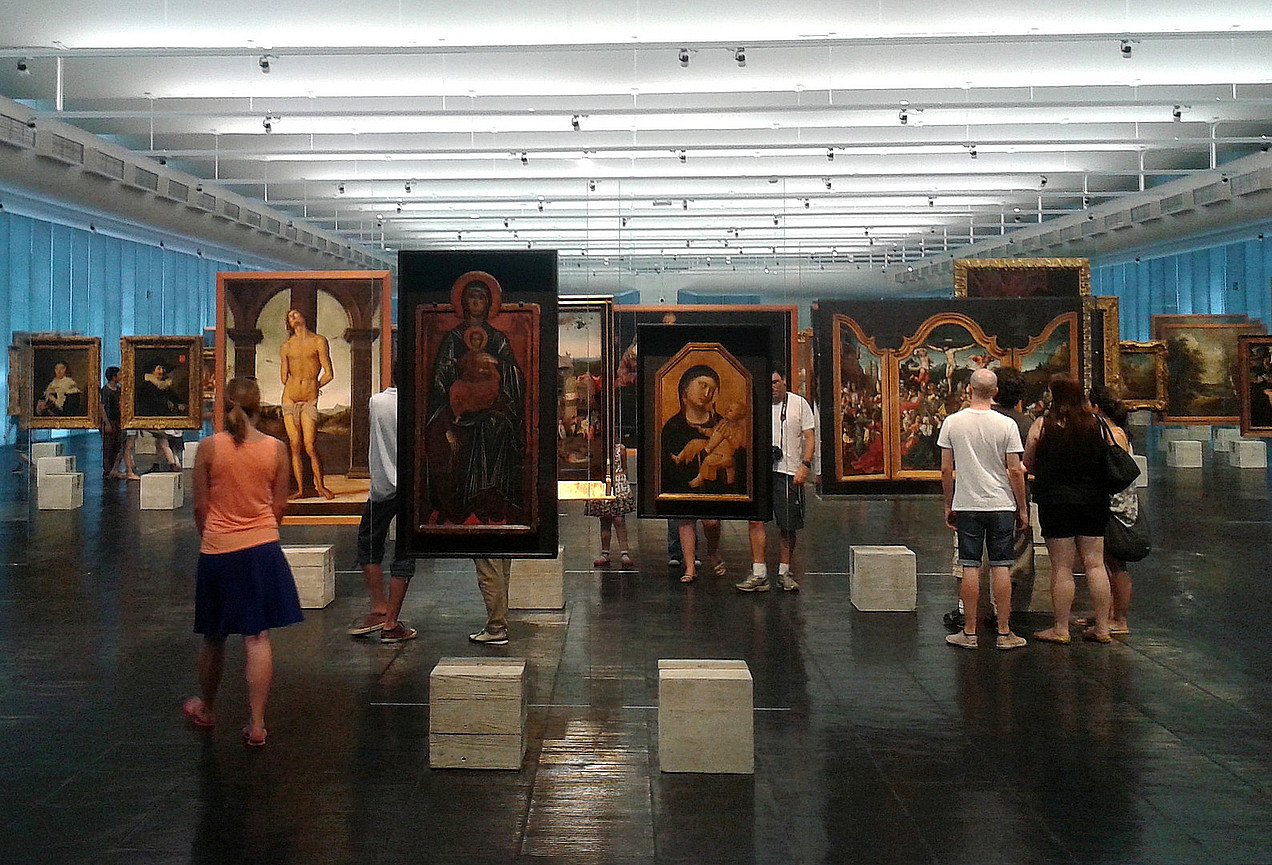
To understand the complex aesthetic and discursive nature of exhibitions, the concept of “display” offers a productive analytical entry point. It encompasses all the elements through which an exhibition and its audience interact on a non-verbal or corporeal level, including the exhibition venue with its specific architectural characteristics, decisions about the design of its spatial boundaries, the type of lighting, the way the exhibits are spatially distributed, the technical aids chosen for their presentation, and the control of visitors’ movement and line of sight within an exhibition.
In contrast to alternative terms like “staging” or “scenography” the category of display shifts focus beyond the intentional interventions by exhibition makers. Its functionally ambiguous status as noun and verb enables it to capture both the structured arrangement of objects and the performative act through which relations between objects, spaces, and publics are produced.
Politics
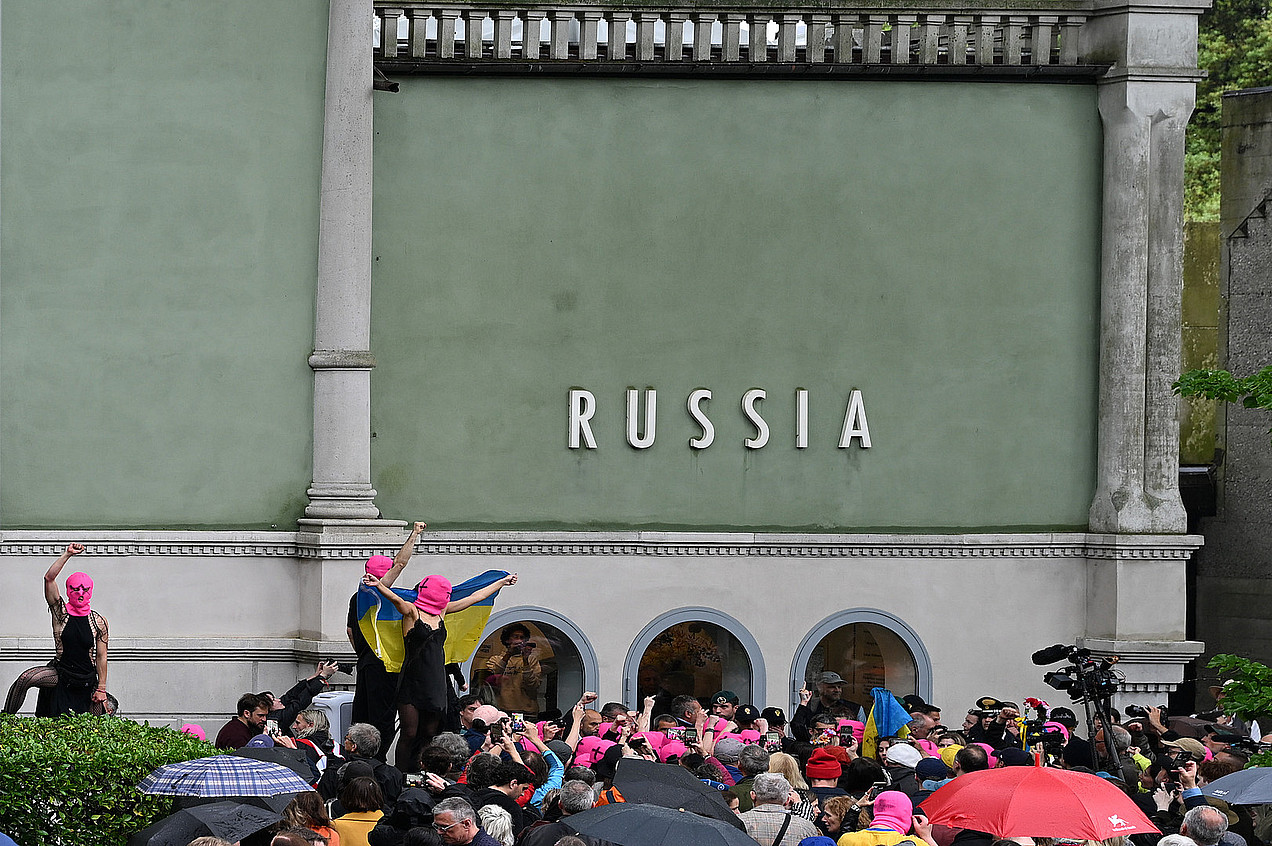
What is put on display, how exhibits are contextualized and interpreted, what overall narrative is created, to whom an exhibition is accessible and whose perspective is represented—these are crucial vectors of what can be called a politics of exhibiting.
The RTG aims to identify and examine the different ways in which politics are inscribed into and generated through exhibition practices, ranging from institutional frameworks and geopolitical tensions to micropolitical interventions, as exhibitions themselves become sites where political meanings, positions, and forms of agency take shape. Exhibiting is thereby understood as a Western practice that has become global. This is not supposed to reaffirm a cultural hegemony of the Global North or to reduce complex global dynamics to a simple logic of centre and periphery. On the contrary, it strengthens a decolonial view on exhibiting as a practice that is historically entangled with European enlightenment thought, including its colonial, racist, and violent underbelly, and allows to critique its proliferation as well as its potential for subversive appropriation from multiple global perspectives.
Infrastructure
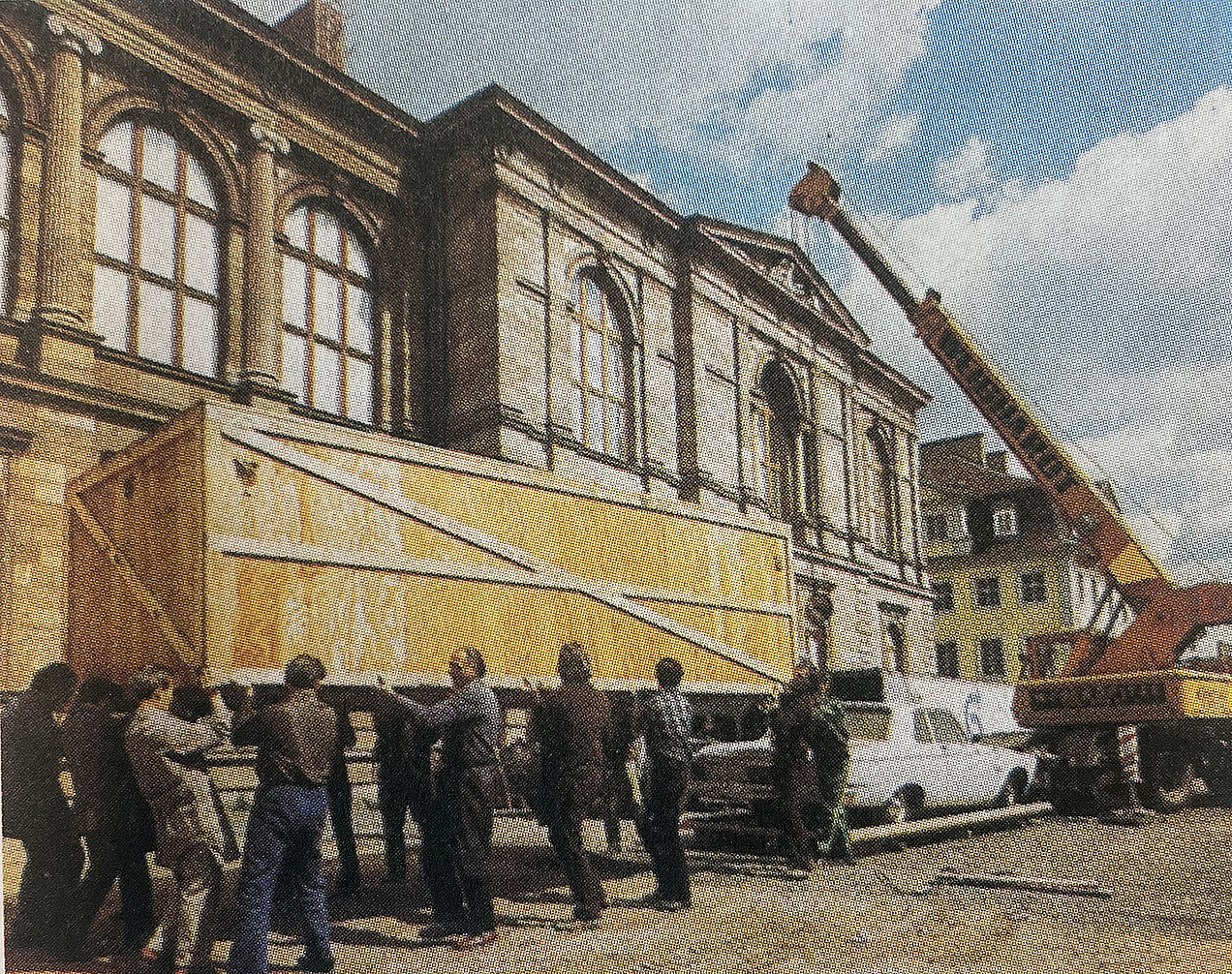
The concept of infrastructure allows to shift the focus from exhibitions as symbolic and discursive events towards the material, organisational, legal, and economic prerequisites without which exhibitions can neither be produced nor operated, transmitted, reconstructed, or critically interrogated. Infrastructures are thus not to be understood as neutral backgrounds, but as form-giving conditions that shape the aesthetic possibilities of exhibitions as well as their social and ecological effects.
An infrastructural perspective enables a systematic investigation of how exhibitions are realized, constrained, and sustained. It integrates praxeological perspectives across disciplines and allows to grasp exhibitions as dynamic assemblages, instead of looking at them as objects fixed in time. Addressing dynamics like labour regimes, implicit knowledge, and organizational frameworks is essential for understanding how exhibitions both depend on and critically reconfigure the material and immaterial conditions under which culture is produced, circulated, and experienced.